Planera din resa
Ont om tid? Berätta vart du ska.
Reseplaneraren väljer ett eSIM för dina resedatum och visar det faktiska priset.
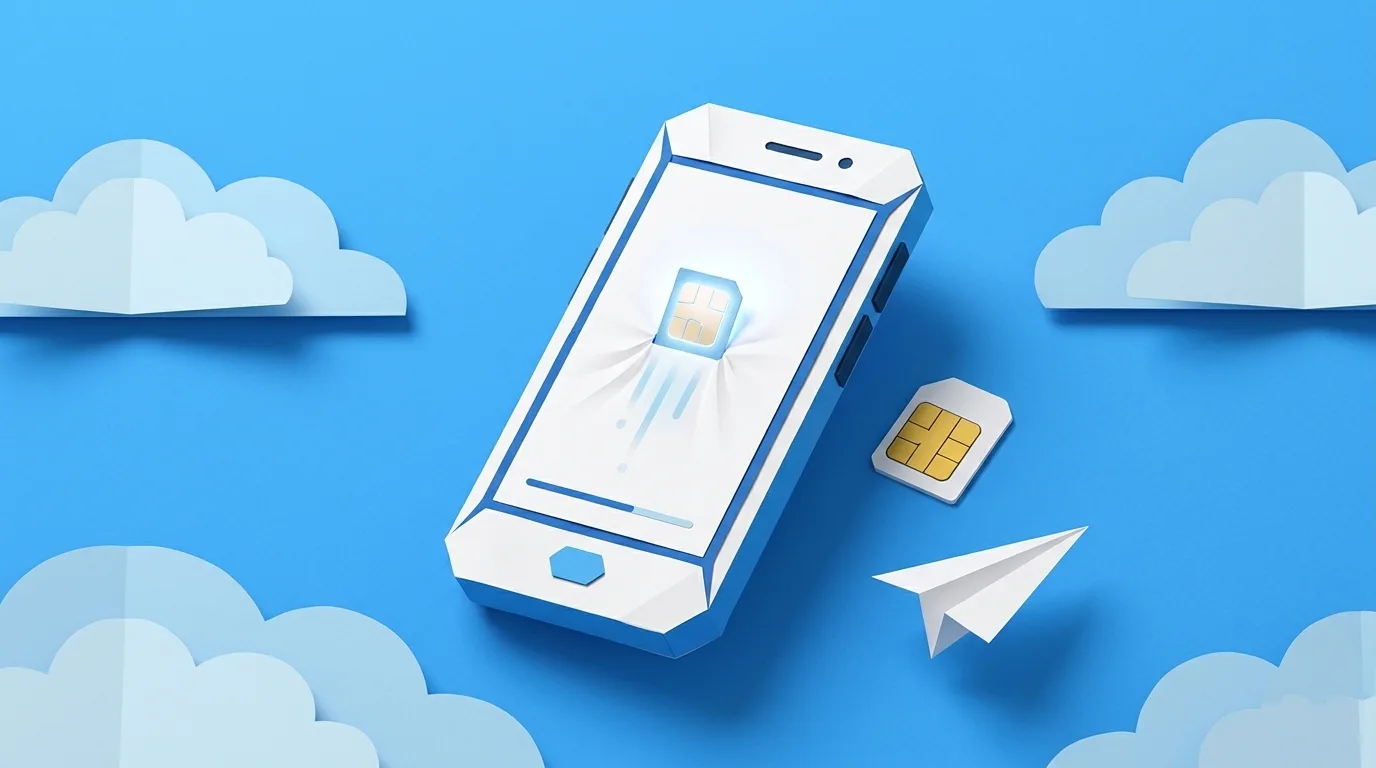
Short answer: an eSIM is a SIM built into your phone as a chip. Instead of inserting a plastic card, you download a mobile plan onto it by scanning a QR code or tapping a link. Most flagship phones released since 2018 have one, and travellers use it to add local data abroad while keeping their home SIM.
If you have ever stood in an airport queue for a local SIM card, or opened a roaming bill after a week away, an eSIM avoids both. It does the same job as the plastic SIM card, without the card.
This guide explains what an eSIM is, how it differs from a SIM card, what travellers use it for, and how to check your phone supports one. Everything here is sourced from Apple, Google, Samsung and the GSMA (the body that writes the eSIM standard), checked on 29 September 2026.
What is an eSIM, exactly?
An eSIM ("embedded SIM") is a small chip soldered inside your phone that stores a mobile plan in software. The GSMA, which writes the specification, describes it as a standard that "enables remote SIM provisioning of any mobile device": your operator sends the plan to the phone over the internet instead of posting you a card.
The plan itself is called a profile. It holds the same things a plastic SIM holds: which network you can join, your account identity and the security keys. The difference is that a phone can store several profiles and switch between them in Settings.
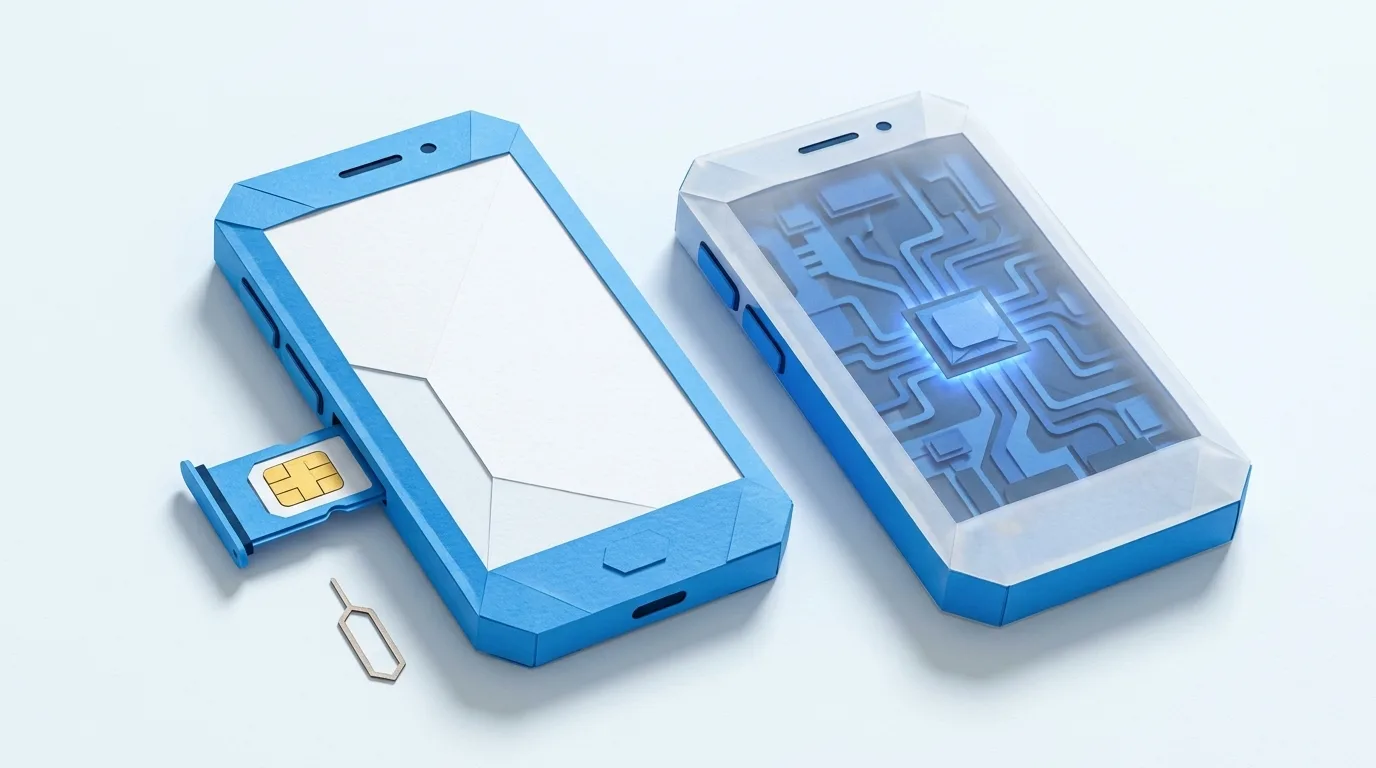
In short: the eSIM is the hardware, the profile is the plan. You never remove the chip; you add, switch or delete profiles.
How is an eSIM different from a SIM card?
A physical SIM is a removable card you swap by hand; an eSIM is fixed inside the phone and you add plans by download. Both connect you to the same mobile networks at the same speeds, because the network sees the same kind of credentials either way.
| Physical SIM | eSIM | |
|---|---|---|
| What it is | Plastic card with a chip | Chip built into the phone |
| How you get a plan | Buy a card, insert it | Scan a QR code or tap to install |
| Plans stored | One per card slot | Several (iPhone: eight or more) |
| Can you lose it? | Yes, it is tiny | No, it stays in the phone |
| Set up before a trip | Only if you buy the card at home | Yes, install at home |
| Works on any phone | Any phone with a slot | Only eSIM-capable phones |
For the longer comparison, including the downsides, read eSIM vs physical SIM.
What do travellers use an eSIM for?
Mostly for mobile data abroad without roaming charges. You buy a data plan for your destination, install it before you fly, and your phone joins a local network when you land. Your home SIM stays in the phone, so calls and texts to your usual number still arrive.
Apple's own travel guidance recommends this split: pick the travel line for mobile data and leave your home line for calls. From iOS 26, Apple says an iPhone can switch off a travel eSIM and turn your home SIM back on automatically when you return, depending on your country.

Typical travel uses:
- Maps, ride-hailing and translation apps from the moment you land
- WhatsApp and FaceTime calls over data, instead of paid roaming calls
- Hotspot for a laptop, where the plan allows it
- A second country on the same trip, by adding another profile
A travel eSIM is usually data only. It gives you mobile internet, not a local phone number, so SMS codes from your bank still go to your home SIM.
Which phones support eSIM?
Most flagship phones from 2018 onwards do, including every iPhone since the XS and XR, Google Pixel 3 and later, and Samsung Galaxy S20 and later in most regions. Some newer models no longer have a SIM slot at all:
- iPhone 14, 15 and 16 models bought in the US are eSIM only (Apple)
- iPhone Air is eSIM only everywhere it is sold (Apple)
- iPhone 17 models sold in the US, Canada, Mexico, Japan and several Gulf countries are eSIM only (Apple)
- Pixel 10 phones sold in the US, except the Pixel 10 Pro Fold, take eSIM only (Google)
Support also depends on where the phone was sold and whether it is carrier-locked. A phone locked to one network may refuse another network's eSIM, even if the hardware supports it.
The quickest way to know is our eSIM compatibility checker: pick your model and it tells you whether an eSIM will work. If you are not sure about the lock, follow how to check if your phone is unlocked; on an iPhone it is one screen in Settings.
How many eSIMs can one phone hold?
An iPhone can store eight or more eSIMs, and iPhone 13 and later can keep two lines active at once, according to Apple. Only one line uses mobile data at a time. Google says Pixel 7 and later can run two eSIMs at once, if the carrier allows it.
In practice that means you can keep your home line, add a travel eSIM for this trip, and leave last year's travel eSIM installed but switched off.
How do you get an eSIM onto your phone?
You install it from a QR code or an activation link, over Wi-Fi, in a couple of minutes. The phone contacts the operator's provisioning server, downloads the encrypted profile and adds a new line in Settings.
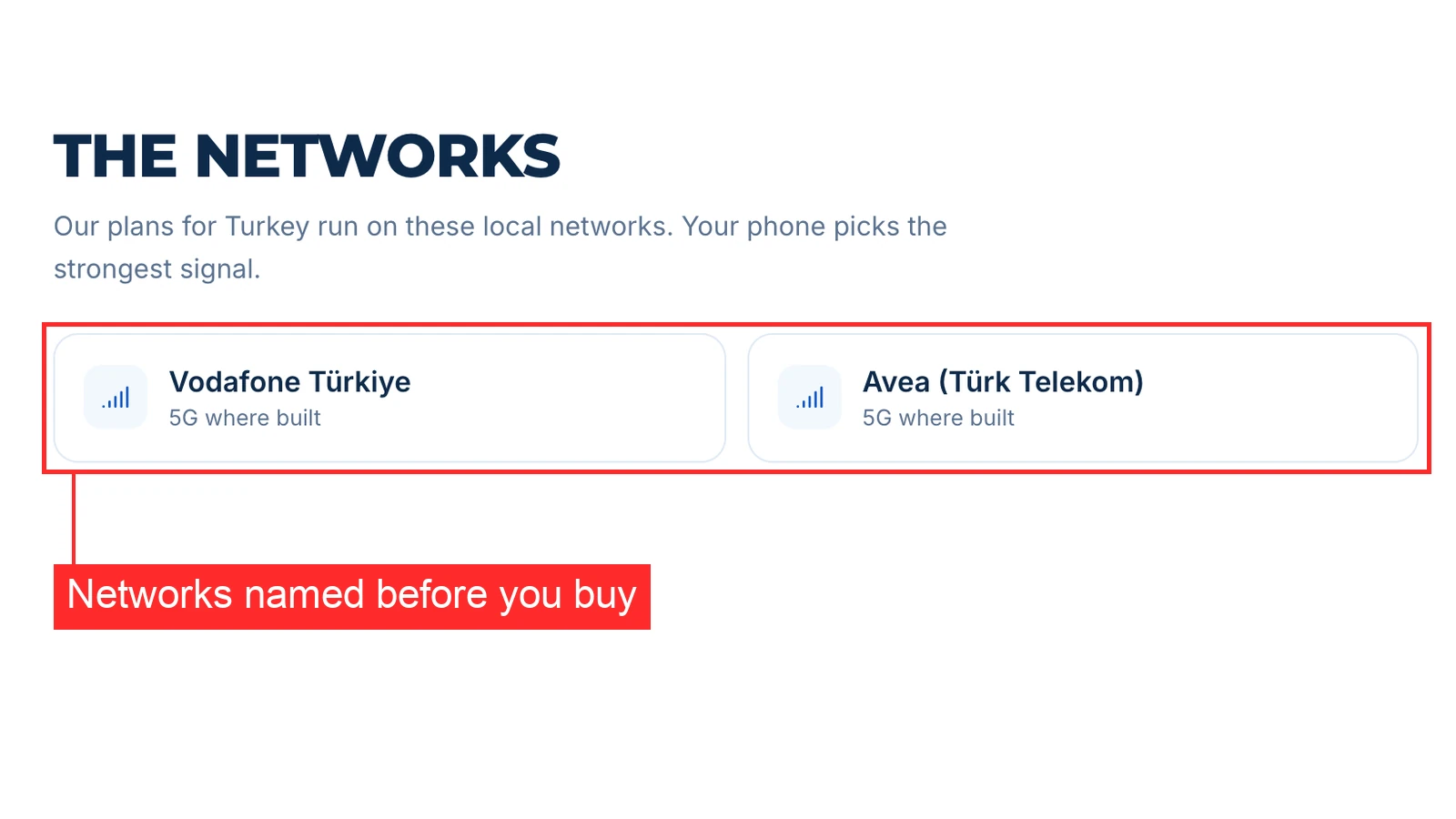
On the Aynet destination pages, the plan card names the real network before you buy. Here is the Turkey page, which lists Vodafone Türkiye and Türk Telekom:
The full sequence, including QR code versus direct install and the data roaming switch, is in how does an eSIM work.
Worth knowing: install the eSIM at home on Wi-Fi, before you fly. Most plans only start counting days when you first connect abroad, and the airport is a bad place to troubleshoot.
Is an eSIM safe?
Yes. An eSIM is at least as secure as a plastic card: the profile is encrypted in transit and stored on a dedicated secure chip. It also cannot be pulled out of a stolen phone and used elsewhere, which a plastic SIM can.
The usual advice still applies: only scan QR codes from the provider you paid, and keep your phone's lock screen on.
Is the eSIM here to stay?
GSMA Intelligence forecast in July 2022 that eSIM smartphone connections would reach around 850 million by 2025 and 6.7 billion by 2030, about three quarters of all smartphone connections. More than 260 operators had launched eSIM services by June 2022. Those figures are forecasts from 2022; newer GSMA numbers are behind a paywall.
Apple and Google already sell models with no SIM tray at all.
If your phone supports eSIM and your trip is coming up, tell Aynet where you are going and get one data plan sized to the trip, with the network named before you pay.
FAQ
What is an eSIM in simple terms?
An eSIM is a SIM card built into your phone as a chip, so you download a mobile plan instead of inserting a card. It connects to the same networks as a plastic SIM. You can store several plans and switch between them in Settings.
Does an eSIM have a phone number?
It depends on the plan. A carrier eSIM for your main line has your number, but most travel eSIMs are data only and come without a number. Your home SIM keeps your number, so calls and texts still reach you while the travel eSIM handles data.
Can I use an eSIM and a physical SIM at the same time?
Yes, on dual SIM phones. An iPhone or Android phone with a SIM slot and an eSIM can run both lines, with one used for mobile data. That is how most travellers keep their home number while using a travel eSIM for data.
Does an eSIM work in every country?
No single eSIM works in every country; each plan covers a named country or region. The phone joins a partner network there, such as Vodafone Türkiye on Aynet's Turkey plans. Check the plan's coverage and network list before you buy, for example on the eSIM for Turkey page.
Do I need to remove my SIM card to use an eSIM?
No. Leave your SIM card where it is. The eSIM adds a second line, and you choose which line uses mobile data in Settings.
Can I transfer an eSIM to a new phone?
Often, yes. Apple's eSIM Quick Transfer moves an eSIM between iPhones running iOS 18.4 or later, if the carrier supports it. Many travel eSIMs cannot be moved once installed, so install them on the phone you will travel with.
Sources: Apple, About eSIM on iPhone, Apple, eSIM-only iPhone models, Apple, Dual SIM with an eSIM, Apple, Using eSIM while travelling, Google Pixel, Use an eSIM, GSMA, eSIM, GSMA Intelligence, eSIM market progress (July 2022). All checked 29 September 2026.
Redo när du är det
Redo att planera din resa?
Beskriv vart du ska åka och få en tydlig eSIM-rekommendation med ett faktiskt pris.
- #Compatibility
- #Esim Basics
Om författaren
Smail Yassine
Editor
Edits and fact-checks Aynet's travel connectivity guides.